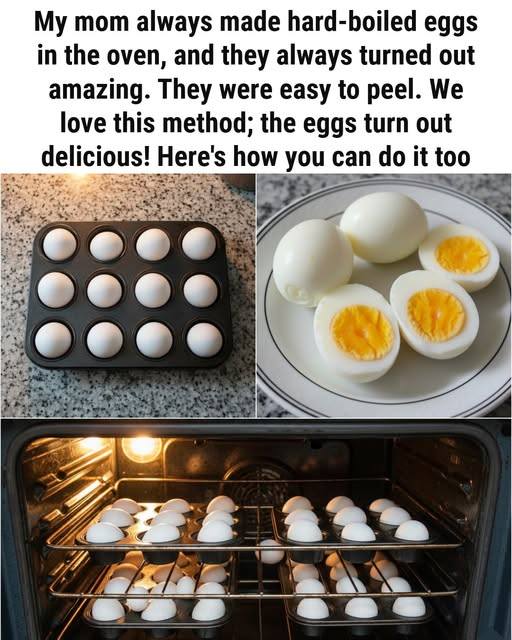
Pros
Hands-off: Walk away while they cook.
Great for big batches: Perfect for meal prep or deviled eggs.
Fewer cracked eggs: No aggressive boiling to worry about.
Peeling might be easier for some.
Cons
Takes longer: 25–30 minutes plus cooling vs. 10–12 minutes on the stove.
Inconsistent results: Eggs may cook unevenly depending on your oven.
Brown spots on shells: Harmless but can look odd.
Risk of rubbery texture if overcooked.
Do Oven-Baked Eggs Taste Different?
Slightly. Whites can be firmer, and yolks may dry out if overbaked. Overcooking may also cause a green-gray ring around the yolk. This happens from a chemical reaction between sulfur and iron. It’s safe to eat but looks unappealing. Adjust oven time and temperature to avoid it.
Peeling Made Easier?
The real key to easy peeling isn’t baking—it’s egg freshness. Older eggs peel more smoothly, whether boiled or baked. Tricks like shaking eggs in a container after cooling can also help.
When to Use the Oven MethodBest for big batches: Oven
Best for speed and consistency: Stovetop
Best for perfect texture: Stovetop
Best for easy peeling: Depends on egg age
If you want a hands-off, no-boil approach, the oven method is worth a try. But if you prioritize speed, precision, and perfect texture, stick to boiling.
Bottom Line
Yes, you can bake hard-boiled eggs—and they work. But should you? It depends on your priorities. For large batches or hands-off cooking, the oven shines. For quick, consistent results, the stovetop wins. Either way, as long as your eggs are perfectly cooked and easy to peel, it’s a success